
Revenue up, volume down. That's the signal. Payward, Kraken's parent, just dropped a $508 million Q2 number. But the tape says volume is bleeding. Something doesn't add up.
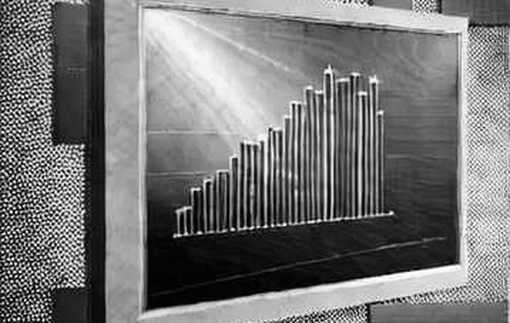
I've been staring at this contradiction since the news hit. A 42% jump in funded accounts against a sliding volume curve. The market is sideways, chop is the only game, and yet Payward claims resilience. The code bleeds, but the liquidity stays cold.
Let's cut the noise. This is a private company floating an IPO narrative. The numbers are selective. But the game is reading the hidden hand.
Context: The Wall Street Toy
Kraken is old guard. 2011 vintage. Survived Mt. Gox, the 2018 winter, the 2022 contagion. No native token, no DeFi fantasies. Just a centralized exchange with regulatory licenses across the US, UK, and Europe. Payward, the holding entity, is structured for a traditional IPO, not a token launch.
The Q2 report: $508 million revenue, volume decline, 42% account growth. The stage is set for an IPO whisper. But the financials are unaudited, and the breakdown is missing. Where's the profit margin? The cost of compliance? The one-time items?
Core: The Divergence Trade
Revenue growing while volume shrinking is either a sign of a structural shift or a one-time sugar hit. I've seen this pattern before. In my 2020 Uniswap V2 liquidity mining grind, I ran $5,000 through ETH-DAI pools. When the flash loan attacks hit, I pulled funds in minutes. The survivors were the ones who diversified revenue streams, not the ones who chased volume.
Kraken's non-trading services—staking, custody, derivatives—are likely the drivers. Staking was a $30 million settlement with the SEC in 2023. That's a scar. But it also means they've been forced to build compliant yield products. The question is whether those products are scalable or just a regulatory workaround.

Account growth of 42% is a double-edged sword. In the 2022 Terra collapse, I saw user counts spike while volume evaporated. New accounts were retail bagholders, not traders. They funded, then froze. The same dynamic could be at play here. High CAC, low activity. The 42% number is meaningless without retention data.
Contrarian: The IPO Trap
Retail sees this as a green light for IPO. The narrative: "Kraken is profitable, user base expanding, ready for public markets." But smart money reads the hidden signals.
First, the revenue composition. If the $508 million includes a large non-recurring item—like a one-time asset sale or a legal settlement reversal—the sustainable run rate is lower. Institutional investors will demand a P&L, not just a top line. I've audited enough Solidity contracts to know that what's not disclosed is usually the risk. The same applies to financial statements.
Second, the volume decline. In a sideways market, low volume is a structural problem for exchanges that rely on trading fees. Kraken's pivot to institutional services (custody, prime brokerage) is a bet that the ETF-era inflows will stick. But the spot Bitcoin ETF approval in January 2024 hasn't reignited retail trading. The whales are here, but they trade OTC, not on the order book.
Third, compliance costs. Operating in the US and Europe means paying for a dozen licenses, audits, and legal teams. The SEC's Howey test looms over staking and lending. If Kraken's revenue growth is tied to these products, the regulatory sword is hanging over the IPO valuation.
Incentives align only when the risk is priced in. Right now, the market is pricing in the upside of an IPO, not the downside of a regulatory crackdown or a volume collapse.
Takeaway: The S-1 Is the Only Truth
Payward is playing a game of signals. The Q2 number is a teaser. The real test is the confidential S-1 filing with the SEC. If it exists, the full financials will surface. I've been in the trenches since 2017, debugging reentrancy flaws in the DAO hack CTF. The lesson: trust the code, not the narrative. For an IPO, trust the filing, not the press release.
Volatility is the only constant truth. The chop will continue until the next catalyst. For Kraken, that catalyst is the IPO prospectus. Until then, treat the $508 million as a data point, not a thesis.

My position: wait for the S-1. If the revenue mix shows sustainable, high-margin non-trading income, the IPO is a buy. If it's a one-time spike, it's a sell. The market is a mirror, not a floor. Right now, the mirror is foggy.
Audit trails don't forgive sloppy narratives. And this narrative has more holes than a Solidity fallback function.